What to Expect from a Dental Crown Procedure
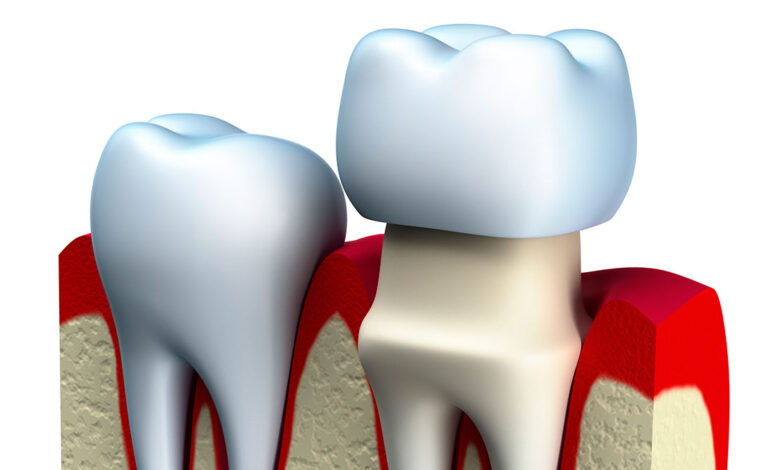
Knowing what’s about to happen in the chair makes a meaningful difference to how dentistry feels. Priya put this together as the visit-by-visit walkthrough for anyone about to have a crown.
Visit 1 — Preparation appointment (90 minutes)
- Discussion and informed consent. Why a crown is needed, what material is being used, what the cost is, what the alternatives are.
- Anaesthetic. Local numbing; the same kind used for fillings. You’ll feel pressure, not pain.
- Tooth preparation. The dentist reduces the tooth by approximately 1–2mm all round, creating space for the crown to fit over. If there’s existing decay or old filling material, it’s removed at this stage.
- Build-up if needed. If the remaining tooth is too short, a composite “core” is built up first to give the crown something substantial to fit onto.
- Impression or digital scan. Modern clinics increasingly use intraoral 3D scanners (no putty), but traditional impressions remain common and work fine.
- Bite registration. A small bite recording so the lab can ensure the new crown meets the opposing teeth correctly.
- Shade selection. If the crown is in the visible smile zone, the shade is matched against your existing teeth (usually best done in natural daylight).
- Temporary crown placement. A protective acrylic temporary is cemented in place to wear for 1–2 weeks.
Between visits (1–2 weeks)
- Eat normally but avoid extremely hard or sticky foods on the crowned tooth.
- Floss carefully — slide floss out sideways rather than snapping up, so you don’t dislodge the temporary.
- Mild sensitivity to hot/cold is normal in the first few days. Settle within a week.
- If the temporary comes off (this happens), ring the clinic — they’ll re-cement it. Don’t try to glue it yourself.
Visit 2 — Fitting appointment (45–60 minutes)
- Anaesthetic if needed. Sometimes not needed at this stage if the tooth has been root-canalled or is comfortable.
- Temporary removed. Quick and painless.
- Permanent crown try-in. The crown is checked for fit, marginal seal, and contact with adjacent teeth.
- Bite check. The crown is checked against the opposing teeth — must feel even when you bite down. Any “high spots” are adjusted before cementation.
- Aesthetic check if visible — you’ll be given a mirror to confirm shape and shade are right.
- Cementation. The tooth and inside of the crown are cleaned and conditioned, then the crown is bonded permanently in place.
- Final adjustments and polish. Excess cement is removed; any final bite refinement.
The same-day CEREC alternative (90–120 minutes total)
Some clinics use in-house CEREC milling. The process compresses both visits into one:
- Anaesthetic.
- Tooth preparation as above.
- Intraoral scan (no impression).
- Crown designed on the dentist’s screen while you wait — typically 15 minutes.
- Crown milled from a ceramic block in the clinic — typically 15–30 minutes.
- Crown stained, glazed and fired — typically 20–30 minutes (some materials don’t need firing).
- Crown bonded immediately. Same day, one visit, no temporary needed.
Quality is on par with lab-fabricated crowns for most cases. Aesthetic match is sometimes slightly less perfect than a skilled lab-finished crown for highly visible front teeth.
The first week with your new crown
- Mild sensitivity common, particularly to cold. Usually settles within 2–4 weeks.
- Bite feels different initially — your tongue will report on it constantly for a few days. If it still feels “high” after a week, ring the clinic for a quick adjustment.
- Avoid very hard foods on the crown for 24 hours while the cement fully sets.
- Floss normally after 24 hours — slide out sideways for the first week.
- Brush as normal.
Long-term care
- Same brushing and flossing as natural teeth — the crown’s margin (where it meets the tooth) is the area most vulnerable to new decay.
- Don’t bite ice, hard nuts, or non-food items on the crowned tooth.
- If you grind your teeth, wear a night guard. Crowns chip when they collide with unprotected teeth at night.
- Annual check-ups — your dentist will check the crown’s marginal seal at each visit.