Dental Crowns Sydney — Porcelain Crowns Explained
Crowns are one of the most-asked-about procedures at our partner clinics. Most patients get told “you need a crown” and immediately Google “do I really?” — so Priya put this page together to answer the questions Sydney readers email us most often.
What a dental crown actually is
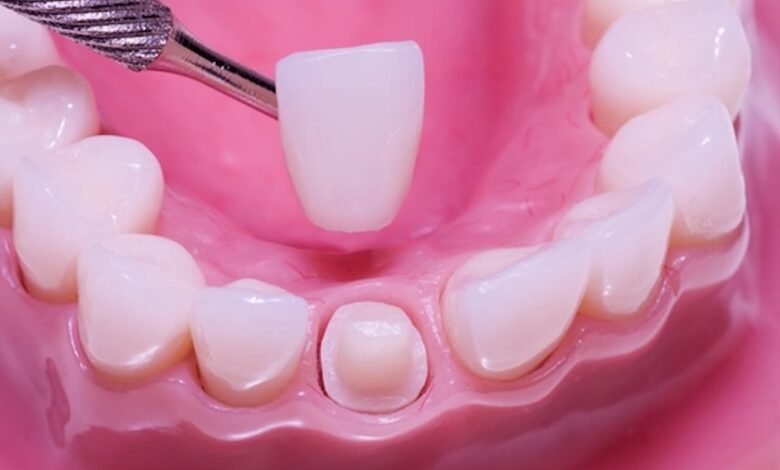
A crown is a custom-made cap that covers the entire visible portion of a tooth. It’s bonded permanently in place. Modern crowns are usually porcelain or zirconia (a ceramic), occasionally porcelain-fused-to-metal in back teeth where bite force is highest. The all-ceramic options look indistinguishable from a real tooth in everyday light.
When do you actually need one?
- After root canal therapy on a back tooth — the tooth is structurally weakened and will fracture without a crown.
- After a large fracture where filling material wouldn’t have enough tooth structure to bond to.
- For severely worn teeth from grinding, where a filling would just chip out again.
- To anchor a bridge across a gap.
- To restore a dental implant.
- For a single discoloured front tooth that doesn’t whiten — though bonding or a veneer should be considered first.
The procedure, end to end
- Assessment — clinical exam and x-ray to confirm a crown is the right call.
- Tooth preparation — under local anaesthetic, the dentist reshapes the tooth so a crown can fit over it. This typically removes 1–2mm of tooth structure all round.
- Impression or scan — either traditional putty impressions or a digital intraoral scan to design the crown.
- Temporary crown placed while the lab fabricates the permanent crown (usually 1–2 weeks). Some clinics offer same-day CEREC crowns, milled in-house.
- Fitting appointment — temporary removed, permanent crown checked for fit and bite, then bonded.
What to expect afterwards
- Immediate sensitivity — common, usually resolves within a few days.
- Bite tweaks — if anything feels “high” when you close your teeth together, ring the clinic; a quick adjustment fixes it.
- Floss carefully — slide floss out sideways rather than snapping it up, so you don’t dislodge a freshly cemented crown in the first week.
- Eat normally after 24 hours — but avoid hard nuts and ice on the crowned tooth long-term.
How long they last
A well-made, well-cared-for crown should last 10–15 years; many last 20+. The most common reason a crown fails is decay developing at the margin where the crown meets the tooth — which is preventable with normal brushing, flossing and check-ups. Grinders and clenchers should wear a night guard.
Sydney fees — what to expect
A single porcelain or zirconia crown in Sydney typically runs $1,800–$2,500 in 2026, before health-fund rebate. Same-day CEREC crowns sit at the upper end. Health funds with major-dental cover usually rebate 30–50%, depending on your level of cover and any annual limits. Always ask for an itemised quote before consenting.