Root Canal Treatment — What It Is, Why You Need It, What to Expect
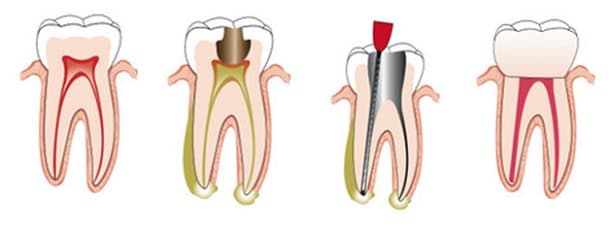
Root canal treatment has the worst reputation in dentistry, and most of it is undeserved. The horror stories date from before modern anaesthetic and rotary instruments. Jordan rewrote this page because we were getting the same panicked emails over and over: “I’ve been told I need a root canal and I’m terrified.”
What a root canal actually is
Each tooth has a hollow chamber inside containing the dental pulp — soft tissue with nerves and blood vessels. When that pulp gets infected (usually from deep decay) or dies (usually from trauma), it has to come out, or the infection will eventually form an abscess at the root tip. A root canal removes the dead/infected pulp, disinfects the inside of the tooth, and seals it.
Despite the name, the tooth itself stays. You keep your own tooth, your own bite, your own bone — you just lose the nerve.
Why you’d need one
- Deep decay that has reached the pulp.
- A cracked or fractured tooth exposing the pulp.
- Trauma (a knock to the face) that has killed the nerve, even if the tooth looks fine.
- Repeated dental work on the same tooth that has stressed the pulp beyond repair.
- An existing abscess visible on x-ray — the infection has already spread to the root tip.
The procedure, end to end
- Local anaesthetic. Modern dental anaesthetic is fast and effective. You’ll feel pressure, not pain. If you do feel pain, the dentist will top up — speak up.
- Rubber dam. A small sheet of latex isolates the tooth from the rest of your mouth. Keeps it dry and stops debris from going down your throat.
- Access. A small opening is made through the top of the tooth into the pulp chamber.
- Cleaning and shaping. Tiny rotary files (modern ones are nickel-titanium and very flexible) clean and shape the canal. Disinfectant solutions kill bacteria.
- Filling. The cleaned, shaped canal is filled with gutta-percha (a rubber-like material) and sealer.
- Temporary restoration. A temporary filling closes the access hole.
- Final restoration. Usually a crown, especially on back teeth, because root-canalled teeth are more brittle. Read our crowns guide.
A simple front-tooth root canal can be done in one 60–90 minute appointment. A complex molar with three or four canals is often split across two visits.
Does it hurt?
The treatment itself doesn’t, when done with proper anaesthetic. The pain people remember is usually before the treatment — that’s the infected pulp, and the root canal is what makes it stop. Mild tenderness for 2–4 days after is normal and managed with paracetamol or ibuprofen.
Success rates
Modern root canal treatment has a 90–95% success rate at 5 years for first-time treatments performed by a competent dentist. Re-treatments are slightly lower (around 75–85%). Failures are usually due to missed canals (the anatomy can be complex), persistent bacteria or new decay developing later under the crown.
Cost (Australia, 2026)
- Single-canal (front tooth) RCT: $1,000–$1,800.
- Premolar RCT: $1,400–$2,200.
- Molar RCT (3+ canals): $1,800–$2,800.
- Plus a crown afterwards: $1,800–$2,500 for porcelain or zirconia.
- Endodontist (specialist) cases: 30–50% above general-dentist fees.
The alternative — and why it’s usually worse
The only alternative to a root canal is extraction. That sounds cheaper — and it is, in the short term. But once you’ve lost a tooth, the long-term options are:
- Implant: $4,500–$6,500. The best aesthetic and functional replacement, but requires surgery and 3–6 months of healing.
- Bridge: $4,000–$6,000. Requires reshaping the teeth either side.
- Partial denture: $1,500–$3,000. Removable, less stable.
- Leave the gap: “free” today, but neighbouring teeth tilt into the space, opposing teeth over-erupt, and your bite gradually destabilises.
Saving the tooth almost always wins, both on cost and on long-term function.