Dental Implants — How They Work & When They’re Worth It
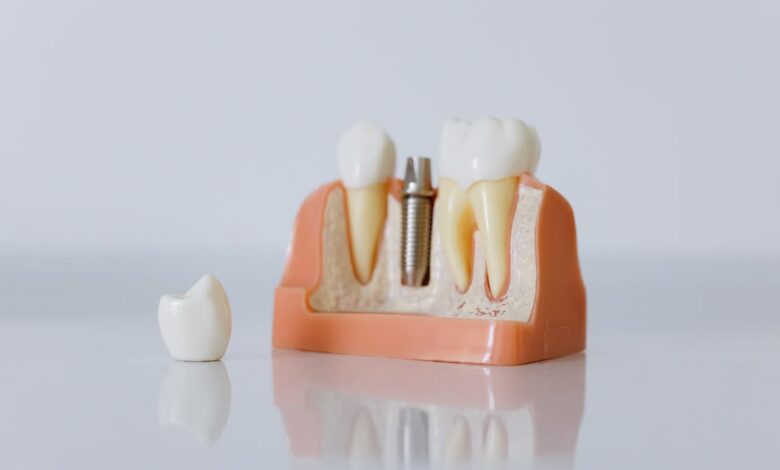
Dental implants are one of the most-asked-about and most-misunderstood treatments we cover. Jordan rewrote this page after his father went through the process — partly to save other families the same Googling marathon.
What an implant actually is
A dental implant is a small titanium (or occasionally zirconia) screw that’s surgically placed into the jawbone where a tooth used to be. The bone heals around it over 3–6 months — a process called osseointegration — at which point the implant is functionally part of the jaw. A custom-made crown (or bridge, or denture-anchor) then attaches to the top.
Unlike a bridge, an implant doesn’t need to lean on neighbouring teeth. Unlike a denture, it doesn’t move. It’s the closest thing modern dentistry has to a “real” replacement tooth.
The full timeline, end to end
- Assessment — clinical exam, 3D CBCT scan, sometimes blood tests. The dentist needs to verify enough bone volume and rule out medical contraindications.
- Extraction (if the failing tooth is still there) — sometimes done at the same appointment as implant placement, sometimes separately.
- Bone graft, if needed — to build up jawbone where it has receded. Adds 4–6 months.
- Implant placement — minor surgical procedure under local anaesthetic, often with sedation. Usually 60–90 minutes for a single implant.
- Healing / osseointegration — 3–6 months. You’ll have a temporary crown or denture for the gap during this time.
- Abutment + impression — the connector piece is attached and an impression or scan taken for the final crown.
- Final crown fitted — usually 2 weeks after the impression.
Recovery — what to actually expect
- Day 1–2: mild to moderate swelling, soreness manageable with paracetamol/ibuprofen. Soft foods only. Some bruising possible.
- Day 3–7: swelling subsides; back to normal-ish food, avoid chewing on the implant site.
- Week 2: stitches dissolve or come out; site looks healed externally.
- Months 2–6: bone integration happens beneath the surface — invisible but critical. Don’t load the implant.
Who shouldn’t get implants
- Heavy smokers. Smoking dramatically reduces implant success — most surgeons require quitting at least 2 weeks before and after surgery.
- Uncontrolled diabetes. Healing is compromised.
- Recent IV bisphosphonate therapy (some osteoporosis treatments) — risk of osteonecrosis.
- Active periodontal disease. Treat first.
- Insufficient bone — without grafting, an implant has nothing to integrate with.
- Patients still growing (typically under 18) — the jaw isn’t finished forming.
When a bridge or denture is a better call
- Bridge: when the teeth either side of the gap are already crowned or significantly restored anyway — using them as bridge anchors avoids surgery.
- Removable denture: when several teeth in a row are missing and budget is tight, or when bone loss makes implants impractical without extensive grafting.
- Implant-retained denture: hybrid — 2–4 implants per arch anchor a denture that no longer floats around. Read our dentures explainer for more.
What it costs in Australia (2026)
- Single implant + crown: $4,500–$6,500 depending on city, surgeon and material.
- Bone graft (if needed): $500–$3,000 depending on extent.
- Sinus lift (upper back teeth): $1,500–$3,000.
- All-on-4 (full arch on 4 implants): $25,000–$35,000 per arch.
Health-fund rebates for implants vary wildly. Some funds rebate the crown but not the implant placement; others have specific implant cover at higher tiers. Always ask the clinic’s treatment coordinator to estimate your out-of-pocket before consenting.
How long they last
A well-placed, well-maintained implant should last 20+ years; many last a lifetime. The implant itself rarely fails; the crown on top might need replacement at the 10–15 year mark, the same as a regular crown. Peri-implantitis (gum disease around an implant) is the major long-term risk — managed with normal hygiene and regular check-ups.