How Do You Brush a Toddler’s Teeth (Without a Wrestling Match)?
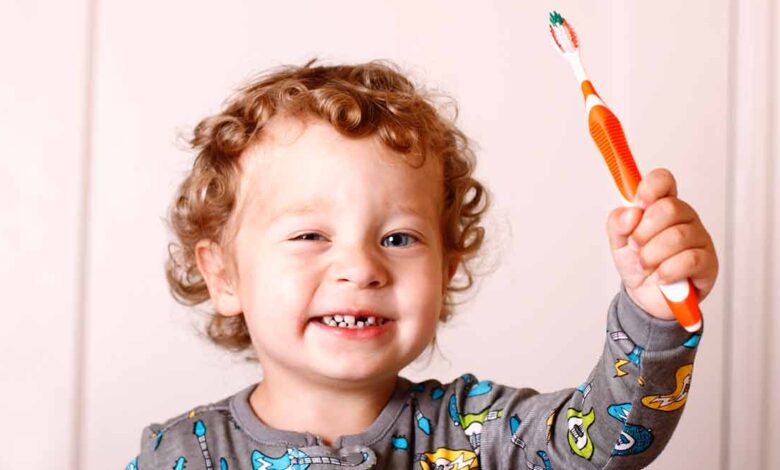
Jordan wrote this one having lived through it twice. Brushing a toddler’s teeth twice a day is the parental task with the highest “why is this so hard” ratio in early childhood. Here’s what actually works.
The non-negotiables (and why)
- Brush twice a day, every day. Decay in baby teeth is real, painful, and expensive. Restorative work in toddlers usually requires general anaesthetic.
- Use fluoride toothpaste from age 18 months (Australian Dental Association recommendation). Pea-sized blob, smear it through; spit but don’t rinse.
- You do the brushing until age 7–8. Their fine motor control isn’t there. They can hold the brush, you guide it.
- First dentist visit by age 1 or within 6 months of the first tooth.
The technique that actually works
The “lap-to-lap” position
The single best position for brushing a resistant toddler. Two adults sit knee-to-knee on the floor. The child lies across both laps with their head in your lap and feet in your partner’s. You have full visibility into their mouth, both hands free, and your partner stops the wriggling.
Solo? Sit on the floor with your back against a sofa, child between your knees facing away from you, head tilted back into your lap. Your dominant hand brushes; the other gently steadies the chin.
Brush in 30-second sections
Don’t try for a continuous two minutes — toddlers don’t have the patience. Break it into four 30-second sections:
- Top right (outside, top, inside)
- Top left (outside, top, inside)
- Bottom left (outside, top, inside)
- Bottom right (outside, top, inside)
Sing a song or play a 30-second timer per quadrant. Brush in small circles, not horizontal scrubs.
The “open wide” trick
Toddlers will close on the brush. The classic trick: gently insert the index finger of your non-brushing hand into the space behind their last molar — they can’t bite down with the finger there. Some hygienists use specialised mouth props ($10 from Amazon) for the same purpose.
Things that help reduce the wrestling
- Same time, same place, same routine. Toddlers are creatures of ritual. After breakfast and before bed are the standard slots.
- Two brushes — one for them, one for you. They “brush” while you do the actual brushing.
- Let them choose the brush colour and the toothpaste flavour. Agency reduces fight.
- Brush your own teeth at the same time with theatrical foam and silly faces. Modelling works.
- Books and apps — there are good toddler books about teeth-brushing (try “The Tooth Book” by Dr. Seuss). Some kids respond well to brushing-timer apps with cartoons.
- Reward the consistency, not the absence of fuss. Sticker charts work; bribery with sweets defeats the purpose.
Things to absolutely avoid
- Bottle to bed with anything other than water. Milk, juice, cordial — guaranteed decay (and “baby bottle decay” is a thing).
- Sippy cups of juice or cordial throughout the day. Constant sugar exposure is worse than concentrated sugar with meals.
- “Whitening” or adult toothpastes on toddlers. Too abrasive, wrong fluoride concentration.
- Skipping nights because you’re too tired. Easier said than done — but the night-time brush is the one that matters most because saliva flow drops during sleep.
When it’s worth ringing the dentist
- You can see any white spots, brown spots, or holes on baby teeth.
- Your toddler is in pain when eating cold food.
- Gums are bleeding regularly when brushed gently.
- Brushing has been a complete impossibility for several days — your dentist or hygienist may have practical suggestions specific to your child.
When can they take over?
- Age 4–5: let them have a go first; you do the proper brush after.
- Age 6–7: they can do most of it; you finish missed spots, especially the back molars.
- Age 8+: usually capable of independent brushing. Spot-check at weekends.
- Age 10+: capable of flossing with adult supervision.